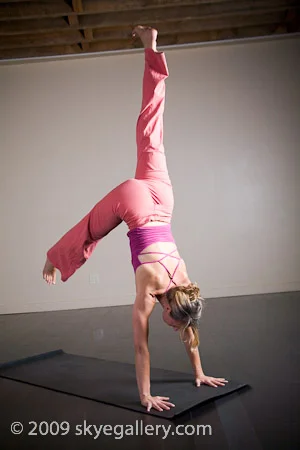
I have a yearning to be whole and to remember who I am.

Comment

I have a yearning to be whole and to remember who I am.

images.jpg

Yoga is the path of unification and a living, dynamic state of unified consciousness. Like the understanding of the unified field within physics - a vibrating field of consciousness that extends through all of the diversity of creation - yoga is both our essence and the way to re-member our essence. This re-membering in hatha yoga is the process of embodiment or experiencing the fullness of consciousness that we are. In the 21st century, we find ourselves in a grand experiment where the cellular wisdom that has evolved over millions of years is experiencing an acceleration of changes (that reveal themselves in the yoga room everyday). For most people in urban centers (even in the small and spacious town of Bend), the rhythms of daily life are radically different from any of their ancestors before. The effects of abstract and instant communication - television, email, cell phones, etc. - that draw and fragment our awareness to the shifts of mono-culture of the body with more and more sedentary-frontal-plane ways of moving in the world, are changing the quality of our embodiment. These shifts combined with an already long history of ambiguity and conflict with the body in the West and current high levels of stress-related diseases are creating an adaptation to disembodiment as a cultural norm. -Shiva Rea from Introcuction to Embodying the Flow

http://youtu.be/ROtBbOcdFxo  images

Currently, I feel this disembodiment in my own life in the area of confidence. I simultaneously fear being seen and being invisible, which is a fragmented experience of it's own. As a yoga teacher, these fears are detrimental at best and debilitating at worst. I cannot hide while teaching, nor can I fully reveal who I am in each moment, the experiences of anxiety, unworthiness, insecurity - are not exactly what you look for when choosing which class to take. Yet, to deny these aspects of myself would be inauthentic and not serving the parts of myself that need full acceptance in order to be let go of - you can see the dangerous path of fragmentation, right? So, what then?

What is the middle ground between the seen and unseen?

After sitting with this question for even just a minute, I knew the answer - it was simple really: embodiment, an in dwelling, a quality you can't describe, it is the essence of charisma, it is that lovely quality that your favorite yoga teacher holds, it's charming, it magnetic and it's special because we have all experienced in ourselves, yet are drawn to those who seem to shine it forth - it's fearlessness - it is an utter trust in, and awareness of, and operation from the inner most Self. Our yoga practice has the ability to provide space for us to re-embody in this way. To provide our entire beings to move in a way that our ancestors did - in a way that is in alignment, with Nature, God, the Universe, Community and Self, no separation, no fragmentation, and very little, if any, abstract or mental fear, aka insecurity. My hope is to practice this, on the mat, but also in all that I do. I have a yearning to be whole and to remember who I am. Do you also share this desire? Let's join together and flow!

Comment

Yoga Library

Comment

Yoga Library

unknown.jpeg

Unknown  

These books are part of my collection. They are altering.

  • Man's Eternal Quest
  • Jivamukti
  • Bhagavad Gita
  • Yoga Sutras
  • Meditations from the Mat
  • Moving into Stillness
  • Kripalu Yoga
  • Tantra - the Path to Ecstasy
  • The Red Book
  • The Tibetian Book of Living and Dying
  • The Heart of Yoga
  • YogaSpandaKarika
  • The Yoga of Heart: The Healing Power of Intimate Connection
  • Sacred Commerce
  • Nature and the Human Soul
  • Soulcraft
  • The Power of Now

Purchase these here and you will be supporting this site. xoxo

Comment

Contemplations on the Dhanda

Comment

Contemplations on the Dhanda

0043_c1010_kat_seltzer_myc_bizport_1.jpg

0043_C1010_Kat_Seltzer_MYC_BizPort_1The Dhanda is a symbolic representation of the spine, where vital energy flows. By cultivating the dhanda, we can create a clearer flow of energy. Yoga is about unifying opposite and utilizing the tension between opposite to find a space between where there is oneness, or a sense of unity, a sense of clarity in which our/the energy can flow unhindered ..

Tension isn’t always a bad thing. It can provide us with the necessary structure or strength to press up against, to lean into so that our own center can be found. Yoga is always about unifying and celebrating opposites as well as the soft sweet spot.

Comment

Be wise investors

2 Comments

Be wise investors

fall1.jpg

The practice of Bramacharya classically translated, leads us to believe that celibacy is part of the yoga practice. This may be true to some degree, but really it's about using the vital life force that we have been given with discernment. The below article does an awesome job of explaining Brahmacharya more fully. I would love for you to read below and share you thoughts with me ... but first a few of my own thoughts ... ImageThe article below has lead me to contemplate my energetic "investments" and I can see very clearly the areas of my life where I am depleting my own energy and the motivation behind my actions. The motivations are good and clean and I find myself just giving away energy to thoughts, worry, future, lack of trust/confidence, instead of harnessing the vital life force I have. One of my favorite explanations of brahmacharya is "discernment." Discernment requires discipline, but it always requires reverence - a sort of fear of the Lord kinda thing that makes me humble in supreme gratitude and calls me to act as a steward of my own energy. It's reverence that brings a whole other element of juice to the practice. I have been given the precious gift of life by my Creator, I have friends and family and work that all give and take energy, and I have a mind that can make choices.

I choose to use my life in such a way that brings glory and light. I choose to be a wise investor. from Yogaglo.com/blog

Brad Waites, the director of the College of Purna Yoga in Vancouver, loves batting around interpretations of the yamas. He says that the classical definition of brahmacharya is misleading, since what brahmacharya actually asks us to do is to think about where we’re putting our energy – sexual or otherwise. And, if we’re expending it in useless places, to figure out how to redirect it. “In the long run,” says Waites, “brahmacharya is about allocation: using your resources effectively to achieve your aspiration. To hone our practice of this principle, we must learn to conserve and not waste energy on things that do not serve our purpose.”

Nice point. In other words, we always have a choice between frittering away our energy on not-so-purposeful actions (and thoughts and worries), and directing them towards those that will serve us better and lead to more happiness, purpose, sense of union. And brahmacharya, if you want it to be, can be as simple as that.

If we do want to think about brahmacharya in a more sexual sense, there are still some really interesting and wide-ranging ways to interpret it. Sharon Gannon, of Jivamukti Yoga School, says that her understanding “is that the practice of brahmacharya means not misusing sex. Brahmacharya means ‘to respect the creative power of sex and not abuse it by manipulating others sexually.’” If we want to be more in unison with the Universe, she says, directing our sexual energy in smart ways is a means to get there. So rather than going to the bar to pick up a one-night stand, we could pour that energy into other places – cultivating more lasting relationships with others, with work, with ourselves, or with yoga. “Brahmacharya is a way to get to God… When sexual energy is directed wisely,” she adds, “it becomes a means to transcend separation, or otherness. When sexual energy is used to exploit, manipulate, or humiliate another, however, it propels us into deeper separation and ignorance (avidya).”

Taking this idea further, Gannon mentions a point to which she’s devoted much of her book Yoga and Vegetarianism – and this is the way in which humans, as a matter of business, misuse the reproductive capabilities of food animals. She tells me that “the sexual abuse of animals is ingrained in our culture, and it expresses itself in the practice of breeding, genetic manipulation, castration, artificial insemination, forced pregnancy, routine rape, and child abuse, which all fall under the category of ‘animal husbandry.’”

All of these routine animal practices might be considered to be seriously out of alignment with brahmacharya, and this misalignment hurts both them and us. Female food and dairy animals, she says, “are forced to become pregnant over and over again until their fertility wanes, at which point they are slaughtered and eaten. Male animals chosen to be sperm donors are sexually abused repeatedly, live in constant frustration, and in the end are slaughtered as well. Such practices are violent, crass and degrading to animals, as well as dehumanizing for the farm workers paid to do this work.”

She adds that, for their sakes and ours, brahmacharya (along with other yamas, like ahimsa, in particular) would ask us to rethink how we treat animals. “Expanding love, kindness and compassion to include all others – animals as well as the earth Herself – is our next big step in human consciousness. Please excuse me, but I cannot overlook the ‘animal issue’ in terms of the yamas.” Obviously, this is a point that’s close to her heart, and she makes a good case for it.

Like the other yamas, brahmacharya is subject to interpretation, but in the end, it has a lot to do with balance, and how we choose to use or “invest” our resources. “Each and every act and thought is an outflow of energy,” says Reverend Jaganath of the Yoga Life Society. “Some thoughts and actions offer beneficial dividends, while others simply drain our resources. In the name of continence, we are asked to be wise investors.”

At their heart, it seems like the yamas all center around intuitive ways of being, and of treating ourselves and others, so that we can be more connected internally and externally. Gannon sums up all five yamas in brilliantly simple terms: “The yamas are about how to treat others – to achieve the aim of dissolving otherness. As Patanjali [the writer of the Yoga Sutras] lists: As long as you see others and not the “One” – not the Self – then don’t hurt them, don’t lie to them, don’t steal from them, don’t abuse them sexually, and don’t be so greedy as to cause them to become impoverished.” And that pretty much says it all.

2 Comments

A fight against more

2 Comments

A fight against more

fight_7.jpg

People in the yoga business all say that you need to have a website, a facebook page, a blog - I have all those things. I have a practice and dedication and a commitment and I am so very out of balance with my health, my livelihood, with my housework. This blog post then, is a way for me to work towards finding balance again. I don't often share my own thoughts on this blog, mostly it's a collection of inspiring quotes and ideas that inspire me, shared with the intention that what I collect may inspire you as well ... Right now, I'm inspired but not by doing more, by doing less, by stepping back, by releasing and by trusting.

My dear old dad is very clear in his thoughts about doing. One of his favorite sayings that often runs through my mind when I am contemplating a step back is "You must work harder, smarter and longer than anyone else." He is also fond I telling me that in order to "be successful" I need to be putting in the 12-14 hours a day to do so. He also likes to make general statements (which are clearly directly at me and when I call him on it he accuses me a playing word games and effectively shuts me down). Some of these statements are that people from Oregon and people from my generation in particular don't know how to work. These words hurt me. They hurt me so much, because I believe that the era of more is too much. I believe (though not with every fiber of my being) that we don't need more hours, more time, more money, more processed things, more capacity to purchase,  we need less! I feel like I have to fight so hard for this not only against my society or my dad, but against myself.

Every spiritual tradition talks about Grace and the slow work of the Lord and the slow and steady trusting that every ounce of nature demonstrates and yet, this voice, these words, these thoughts of more more more now now now drive me insane. Though I fight - I can't seem to win or release them. My stomach tightens and my brow tightens and tears role down my cheeks fighting this fight.

So what do it do? What do it do except write and take note of sensations and feelings as they arise. Waiting, waiting, waiting for the space to increase, for God to enter and to let it all go. And do it again and again and again until the balance is restored.

2 Comments